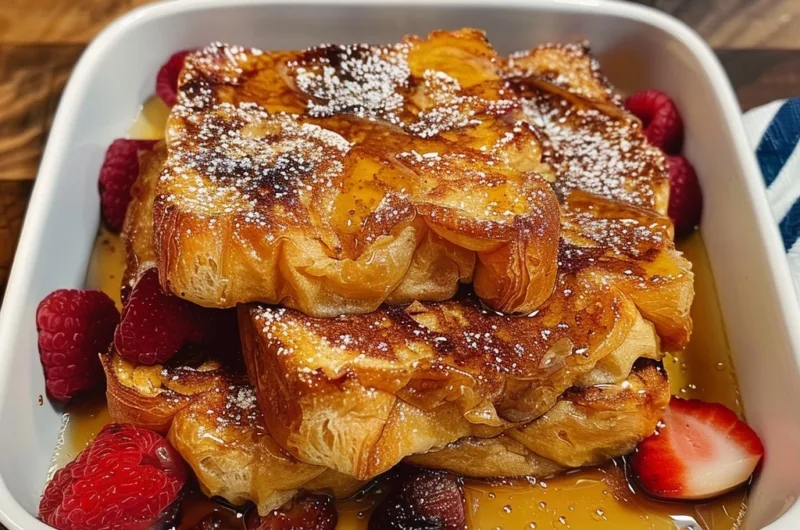
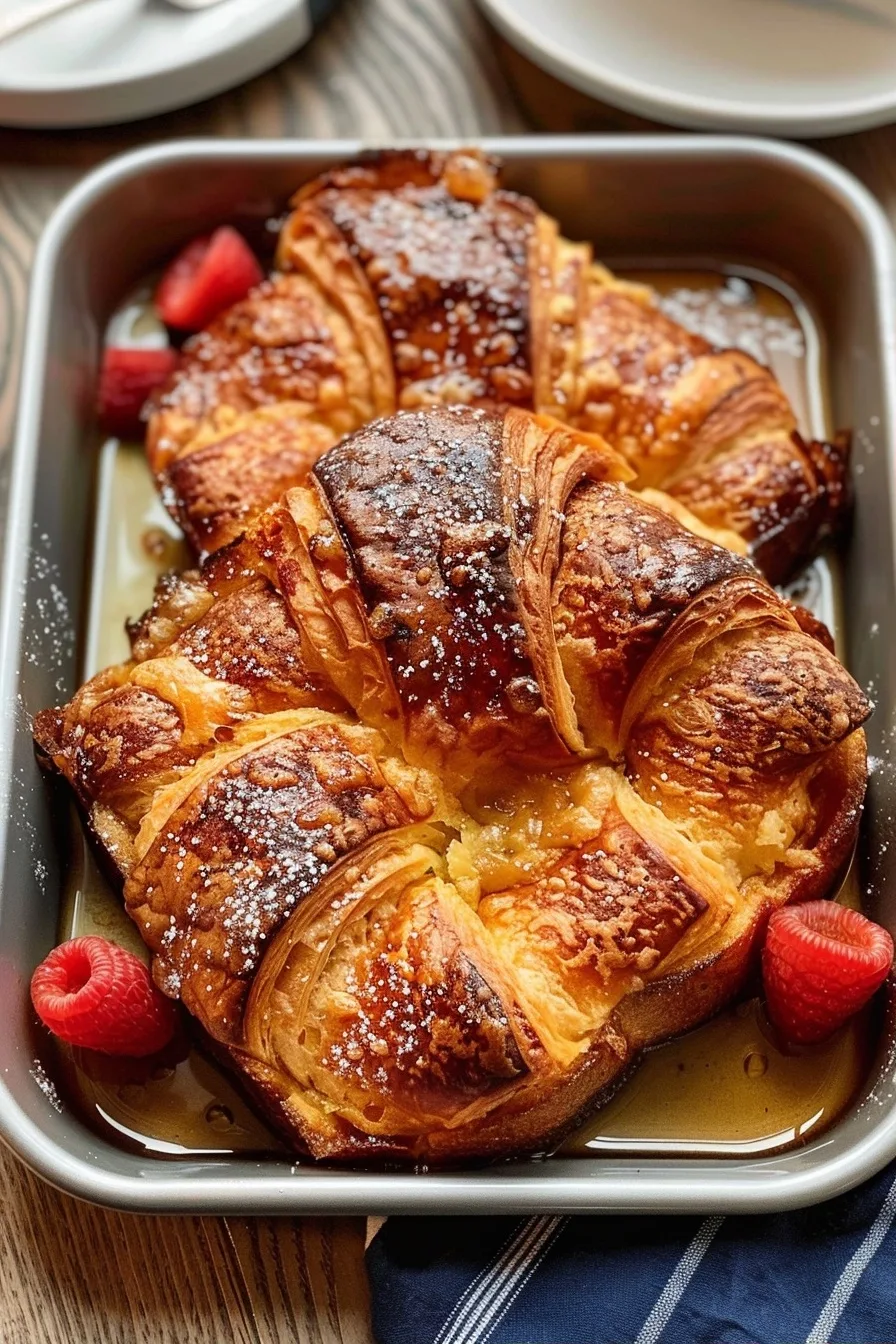
Croissant Baked French Toast is a breakfast masterpiece that transforms buttery croissants into a custard‑filled delight. By layering sliced croissant dough in a shallow custard bath, the pastry absorbs silky sweetness while crisping into golden elegance. The result is a texturally diverse dish that balances airy interior and crunchy exterior, delivering comforting richness in each bite.
Why This Recipe Works
This method builds flavor through caramelization, as the croissant’s layers develop depth when toasted in a gentle oven. Freshly whisked custard infuses moisture, preventing dryness and allowing a tender crumb that contrasts the crisp edges. The sweet‑spiced batter amplifies the buttery base, ensuring each bite offers subtle vanilla sweetness balanced by a hint of cinnamon pepper. Consequently, the dish delivers a satisfying harmony of textures and aromatic warmth that consistently satisfies.
When incorporating classic French toast techniques, the batter’s consistency mimics a custard to lift croissant staves, while strategically drying the pastry ensures stability. The brief oven soak lets the flour absorb the custard, enabling the cookie‑like outside to crisp while the inside melts into melt‑soft goo. A finishing touch of powdered sugar or maple syrup adds bright contrast and sweet finish, reinforcing the dish’s indulgent but comforting appeal.
Ingredients
| Ingredient | Quantity | Notes (Alternatives) |
|---|---|---|
| Fresh croissants (unbuttered) | 4 whole (≈600 g) | Choose high‑quality pastry; substitute laminated dough for a lighter feel. |
| Eggs (large) | 3 | Helps bind custard; replace with 3 tbsp flaxseed meal + 9 tbsp water for vegan version. |
| Whole milk | ¾ cup (180 mL) | Use dairy‑free milk for lactose‑free option. |
| Heavy cream | ¼ cup (60 mL) | Substitute ¼ cup coconut cream to reduce dairy content. |
| Granulated sugar | 3 tbsp (45 g) | Dutch‑process sugar offers deeper flavor. |
| Cinnamon powder | 1 tsp | Freshly ground improves aroma. |
| Vanilla extract | 1 tsp | Pure vanilla enhances sweetness. |
| Salt | ½ tsp | Brings all flavors to life. |
| Butter (for greasing pan) | 2 tsp | Prevent sticking. |
Step‑By‑Step Instructions
- Gather, measure, and sift all dry spices to combine smoothly.
- Whisk eggs, milk, cream, sugar, cinnamon, vanilla, and salt in a medium bowl until uniform.
- Cut each croissant crosswise into ½‑inch wide strips, leaving the base attached at one side for stability.
- Line a rimmed sheet with parchment; lightly brush with melted butter.
- Arrange croissant strips in a single layer, ensuring they touch slightly for even heat.
- Bury the sliced croissants using a shallow custard soak; rinse excess batter to keep edges crisp.
- Cover the sheet with foil and bake for 12 minutes at 350 °F (177 °C); this brief bake lets the pastry absorb the custard without becoming soggy.
- Remove foil, then bake uncovered for an additional 8 minutes, checking to ensure golden edges.
- When the surface turns crisp, cool 5 minutes on wire rack before serving.
- Garnish with powdered sugar or drizzles of maple syrup; sprinkle fresh herbs if desired.
- Serve immediately to preserve the contrast between airy and crunchy textures.
Sift and Prepare Ingredients
Prep Baking Sheet
Infuse the Custard
Final Baking Phase
Plate and Enjoy
Chef Tips for Perfect Results
- Use freshly baked croissants, as stale dough absorbs less custard, leading to uneven texture.
- Separate custard soaking time from actual oven baking, as simultaneous hydration can soften the pastry too much.
- Adjust sugar ratios to taste; a lighter slice may favor refined almond milk for a smoother flavor profile.
- Preheat the oven fully before baking; uneven temperatures cause uneven crispness.
- Apply an extra butter layer before placing croissants on the sheet; it creates a protective barrier, preventing sticking and promoting golden browning.
Common Mistakes to Avoid
1. Over‑saturating the croissant strips – cast the batter too thick and the result becomes soggy inside; keep batter thin by whisking vigorously.
2. Omitting the initial quick bake – this missing step locks the pastry’s structure; perform the brief bake at 350 °F exactly to maintain firmness.
3. Neglecting to flip halfway through the second bake – this prevents uneven browning; simply rotate the pan half the time.
4. Using pre‑buttered croissants – additional fat interferes with crisping; start with plain dough instead.
5. Cooling too soon on the sheet – early cooling causes sogginess; allow a 5‑minute rest on wood rack to let steam escape.
Variations and Substitutions
| Ingredient | Substitution | Impact on Flavor |
|---|---|---|
| Milk | Almond milk | Nudges the taste toward nutty; reduces lactose. |
| Cinnamon | Ginger‑spiced gingerbread powder | Adds warmth and a subtle heat edge. |
| Vanilla | Lemon zest + vanilla essence | Bright citrus lifts sweetness. |
| Butter | Olive oil | Edge crispness less pronounced; a hint of fruity undertone. |
Serving Suggestions and Pairings
For brunch, pair with a splash of freshly squeezed orange juice and a dusting of toasted almond slivers. Serve alongside warmed yogurt topped with fresh berries for balanced acidity. For a festive twist, drizzle honey infused with spices, such as cardamom, between layers. Pair this indulgent dish with a light, aromatic tea like chai or Earl Grey to offset sweetness.
Storage and Reheating
| Method | Duration | Instructions |
|---|---|---|
| Refrigerator | Up to 48 hours | Wrap tightly in foil, then reheat in a 350 °F oven for 5 minutes. |
| Freezer | Up to 2 weeks | Store in a zip‑lock bag, thaw overnight, then warm as above. |
Nutritional Information
| Nutrient | Amount per Serving (Approximate) |
|---|---|
| Calories | 715 kcal |
| Protein | 20 g |
| Fat | 45 g |
| Carbohydrates | 70 g |
| Fiber | 3 g |
| Sugar | 25 g |
| Sodium | 480 mg |
Frequently Asked Questions
Can I use pre‑baked croissants for this recipe?
Not recommended. Use fresh dough without added butter, as it fully absorbs custard and crisps without becoming soggy.
How do I know when the interior is done?
Inside should be set, not runny. A quick finger test shows light springiness without liquid leakage.
What troubleshooting steps can I take if it browns too quickly?
Lower the oven temperature by 25 °F and extend the baking time to ensure even heat distribution.
Is it possible to prepare this ahead of time?
Yes. Assemble the layers, refrigerate, then bake freshly when ready to serve; avoid soaking in custard until right before baking to preserve crispness.
Which toppings truly enhance this dish?
Fresh berries, a powdered sugar dusting, a swirl of maple syrup, and optional citrus zest produce the most harmonious profile.
Conclusion
Croissant Baked French Toast elevates a classic morning indulgence into a next‑level culinary experience that showcases flaky pastry and rich custard. By following precise soaking, baking, and warming steps, you secure a dish that bursts with buttery layers, soft golden flesh, and aromatic spice. Bring this recipe to the table and let every bite celebrate buttery comfort and subtle sweetness.

Croissant Baked French Toast: A Flaky, Sweet Breakfast Classic
Ingredients
Method
- Preheat oven to 350°F (175°C)
- Whisk eggs, milk, cream, sugar, cinnamon, vanilla, and salt in a shallow bowl
- Slice croissants horizontally and gently layer in a greased baking dish
- Pour custard over croissants, ensuring even saturation
- Let soak for 10-15 minutes
- Spread butter in an even layer on top
- Bake for 20-25 minutes until golden and puffed
- Sprinkle powdered sugar or drizzle maple syrup before serving
Notes
Dutch-process sugar deepens flavor
Substitute flaxseed meal (3 tbsp + 9 tbsp water) for vegan version
Use coconut cream for a dairy-free custard