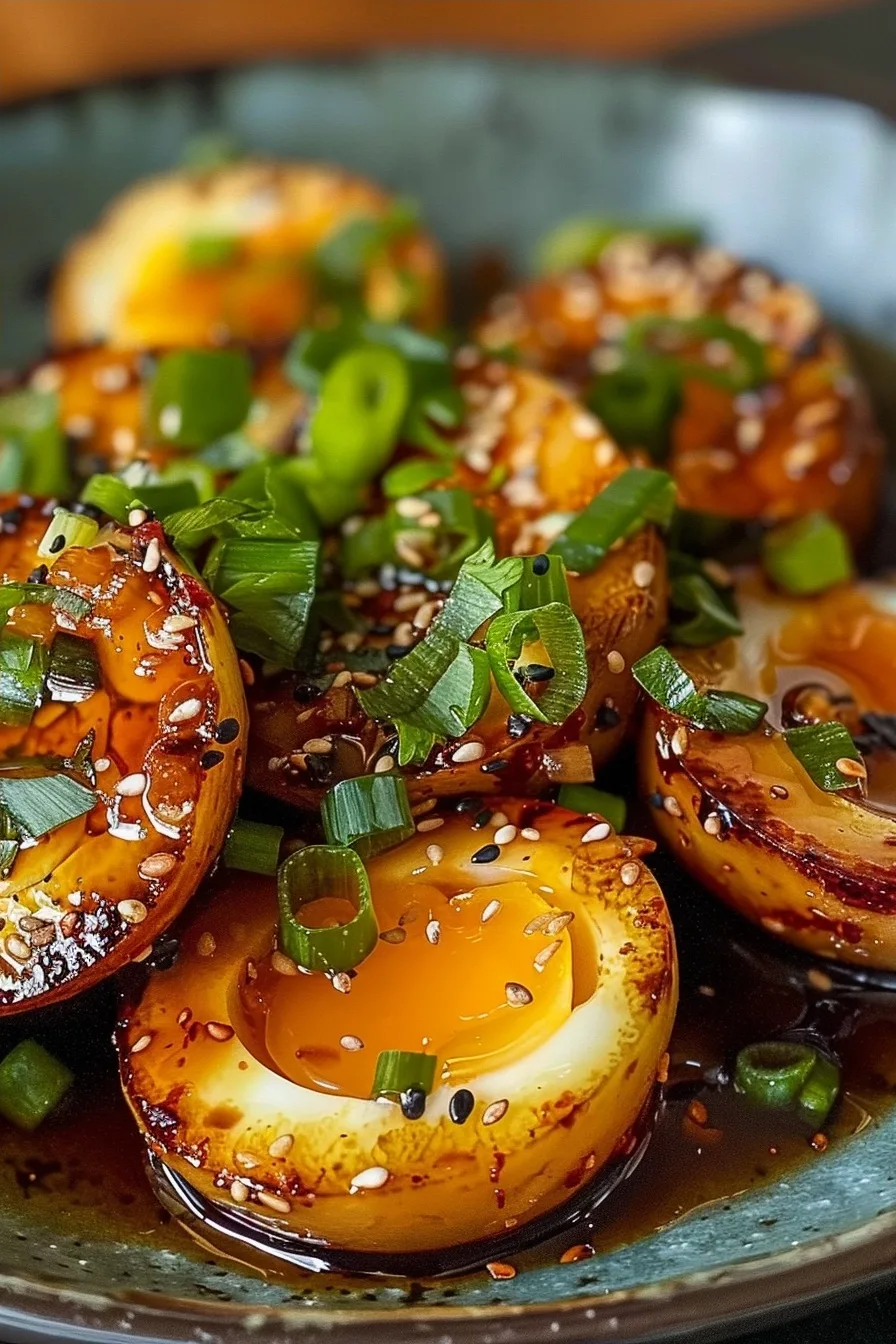
Korean Marinated Eggs Mayak combines soft boiled yolks, a tangy soy sauce base, and a spicy kick for a breakfast that satisfies hunger and awakens the palate. This snack, commonly shared among friends, provides a crunchy contrast to the tender egg interior.
Why This Recipe Works
I first discovered Korean Marinated Eggs Mayak on a rainy Korean weekend, when I watched friends fry eggs with a fragrant mixture that turned plain yolks into edible gems. The balance of salty, sweet, and subtle heat keeps the taste from tipping into cloying or bland. My careful timing and consistent simmering keep the eggs from drying out while ensuring the sauce thickens to cling to each layer.
What makes this recipe stand out is the layering of texture: the silky yolk, the supple whites, and the caramelized exterior of the glaze. The freshly ground pepper signals the end of the cooking phase, adding a silky aroma that lingers after the final bite. Each bite is an invitation to repeat the experience, making it both a comforting and exciting breakfast option.
Recipe Overview
| Prep Time | Cook Time | Total Time | Servings | Difficulty | Cuisine |
|---|---|---|---|---|---|
| 10 min | 15 min | 25 min | 2 | Easy | Korean |
Ingredients
| Ingredient | Quantity | Notes / Alternatives |
|---|---|---|
| Eggs (large) | 6 | Use fresh, free‑range for better texture. |
| Low‑sodium soy sauce | 1/4 cup (60 mL) | Gluten‑free version works. |
| Rice vinegar | 2 tbsp (30 mL) | Apple cider vinegar as a substitute. |
| Brown sugar | 1 tsp (5 g) | White sugar gives lighter sweetness. |
| Sesame oil | 1 tsp (5 mL) | Can be replaced with neutral oil. |
| Black pepper | 1 tsp (5 g) | Freshly ground for optimal aroma. |
| Gochugaru (Korean red pepper flakes) | 1 tsp (5 g) | Use mild flakes for less heat. |
| Minced garlic | 1 clove | Optional – rolls with a subtler impression. |
| Spring onions, sliced | 2 tbsp (15 mL) + garnish | Red or white offers color contrast. |
| Semi‑sweet soy-based sauce (like KGB Soy Sauce) | optional 2 tsp | Increases umami depth. |
| Water | 1.5 cups (360 mL) | Added to reduce sauce thinness. |
Step-by-Step Instructions
Phase 1: Boiling Eggs
- Place eggs in a saucepan and cover with cold water.
- Bring to a rolling boil over medium heat.
- After the water boils, reduce heat to low and simmer 9 minutes for slightly runny yolks.
- Transfer eggs to an ice bath for 3 minutes to halt cooking.
- Peel eggs once cooled; set aside.
Phase 2: Preparing Grease
- In a small saucepan, combine soy sauce, rice vinegar, sugar, sesame oil, black pepper, gochugaru, minced garlic, and water.
- Heat over medium until sugar dissolves, forming a glaze.
- Stir the mixture until it thickens to a syrupy texture (approximately 5-7 minutes).
- Pour the glaze over the peeled eggs, ensuring each one is fully coated.
- Transfer to a resealable bag, seal, and refrigerate for at least 1 hour.
Phase 3: Serving Preparation
- Remove eggs from the bag and slice them into halves or quarters.
- Drizzle the remaining glaze onto the sliced eggs.
- Garnish with sliced spring onions and a sprinkle of toasted sesame seeds.
- Serve immediately with fresh lettuce or side salad to accentuate crunch.
- Optional: accompany with steamed rice as a complete meal.
Chef Tips for Perfect Results
- Use a timer when boiling to guarantee even yolk consistency.
- Instantly chill eggs after boiling; this stops unwanted cooking and makes the skins easier to slough.
- Keep the glaze at a gentle simmer; too high heat may burn sugar, while too low will never thicken.
- Whisk the glaze frequently to avoid grainy texture.
- Store marinated eggs in an airtight container; use within 3 days to preserve freshness.
Common Mistakes to Avoid
- Boiling eggs for too long creates rubbery whites; keep to 9 minutes for a silky interior.
- Adding glaze before peeling leads to excess moisture; apply only after coating eggs.
- Cooking the glaze at high temperature dissolves sugar into caramel, turning the sauce bitter.
- Marinating eggs at room temperature for an extended period allows bacteria to grow; keep refrigerated.
- Using dried red pepper substitutes can produce uneven heat; opt for fresh flakes where possible.
Variations and Substitutions
| Ingredient | Substitution | Impact on Flavor |
|---|---|---|
| Rice vinegar | Apple cider vinegar | adds fruitier acidity. |
| Gochugaru | Paprika | replaces heat with smoky sweetness. |
| Brown sugar | Honey | provides floral notes. |
| Sesame oil | Neutral cooking oil | reduces nutty aroma. |
| Low-sodium soy sauce | Sodium-free soy sauce | lowers sodium while maintaining umami. |
Serving Suggestions and Pairings
- Breakfast: Serve over toasted bread or with a side of kimchi for classic Korean brunch.
- Party Appetizer: Present on a wooden platter among dried shrimp and sliced cucumber.
- Team Lunch: Pair with steamed rice and clear vegetable soup for a balanced meal.
- Garden Picnic: Pack lightly sliced eggs in a small container and top with fresh cilantro.
- Contemporary Fusion: Combine with avocado toast for a trendy, savory spread.
Storage and Reheating
| Method | Duration | Instructions |
|---|---|---|
| Refrigerator | Up to 3 days | Keep in airtight container; consume chilled or lightly warmed. |
| Freezer | Up to 2 weeks | Full glaze can be frozen; thaw overnight before use. |
| Microwave | 1–2 minutes | Heat in short bursts; stir between bursts for even warmth. |
| Toaster Oven | 3–5 minutes | Place eggs loosely in a shallow dish; toast until edges crisp. |
Nutritional Information
| Nutrient | Amount per Serving (2 eggs) |
|---|---|
| Calories | Approximate 190 kcal |
| Protein | Approximate 12 g |
| Fat | Approximate 15 g |
| Carbohydrates | Approximate 6 g |
| Fiber | Approximate 0 g |
| Sugar | Approximate 5 g |
| Sodium | Approximate 600 mg |
Frequently Asked Questions
Can I use a different sweetener instead of brown sugar?
Yes, honey or maple syrup can replace brown sugar; they will slightly alter the density and introduce floral hints.
What texture defines perfectly done eggs?
Yolks should remain creamy with a hint of tracery; whites should be firm yet tender without rubbery streaks.
What cause soggy eggs, and how to prevent it?
Sogginess arises from prolonged contact with liquid glaze; remove excess glaze right before plating to keep eggs crisp.
Is it safe to make this dish a day in advance?
Yes, store the marinated eggs in a sealed container in the refrigerator; consume within 3 days for optimal safety.
How many servings can I prepare for a large group?
Use 3 eggs per person; pre‑marinate multiple batches and keep warm until serving to maintain flavor.
Thanks for exploring this easy yet sophisticated Korean breakfast. With these thoughts, your next day will start off with richly marinated, unforgettable eggs.
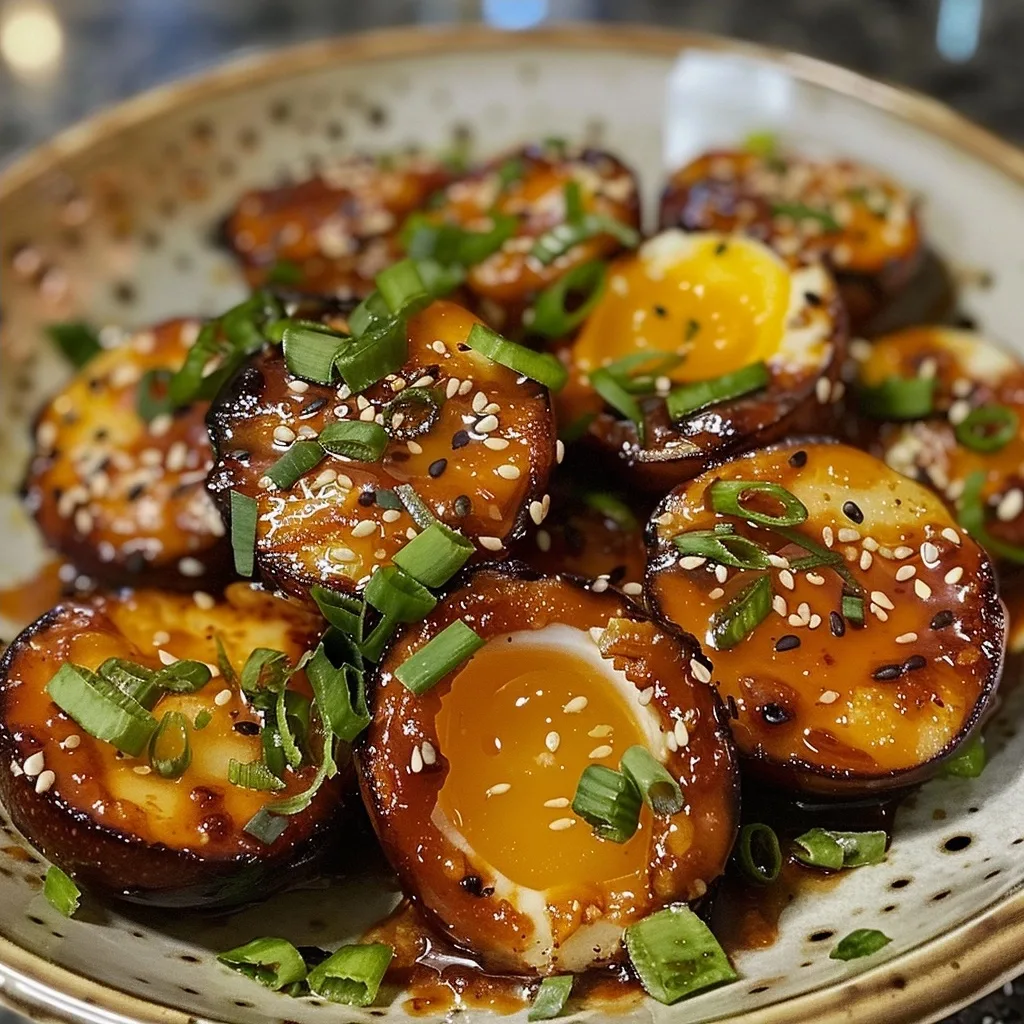
Korean Marinated Eggs Mayak
Ingredients
Method
- Place eggs in saucepan with cold water. Bring to boil, then reduce to low and simmer 9 minutes.
- Cool eggs in ice bath, peel while sauce simmers.
- Combine soy sauce, rice vinegar, brown sugar, sesame oil, pepper, gochugaru, garlic, spring onions, and water in skillet.
- Simmer sauce until thickened to syrup (about 10 minutes). Toss with peeled eggs until coated.
- Optional: Add 2 tsp semi-sweet soy sauce for deeper umami flavor.
Notes
Gluten-free soy sauce suitable
Apple cider substitutes rice vinegar
Add 2-3 tbsp cornstarch slurry for thicker glaze
Store leftovers in sealed container up to 2 days